
MIGRATION AND GENDER
Women Bear the Cost of the Lockdown
Drishti Agarwal and Manju Rajput*
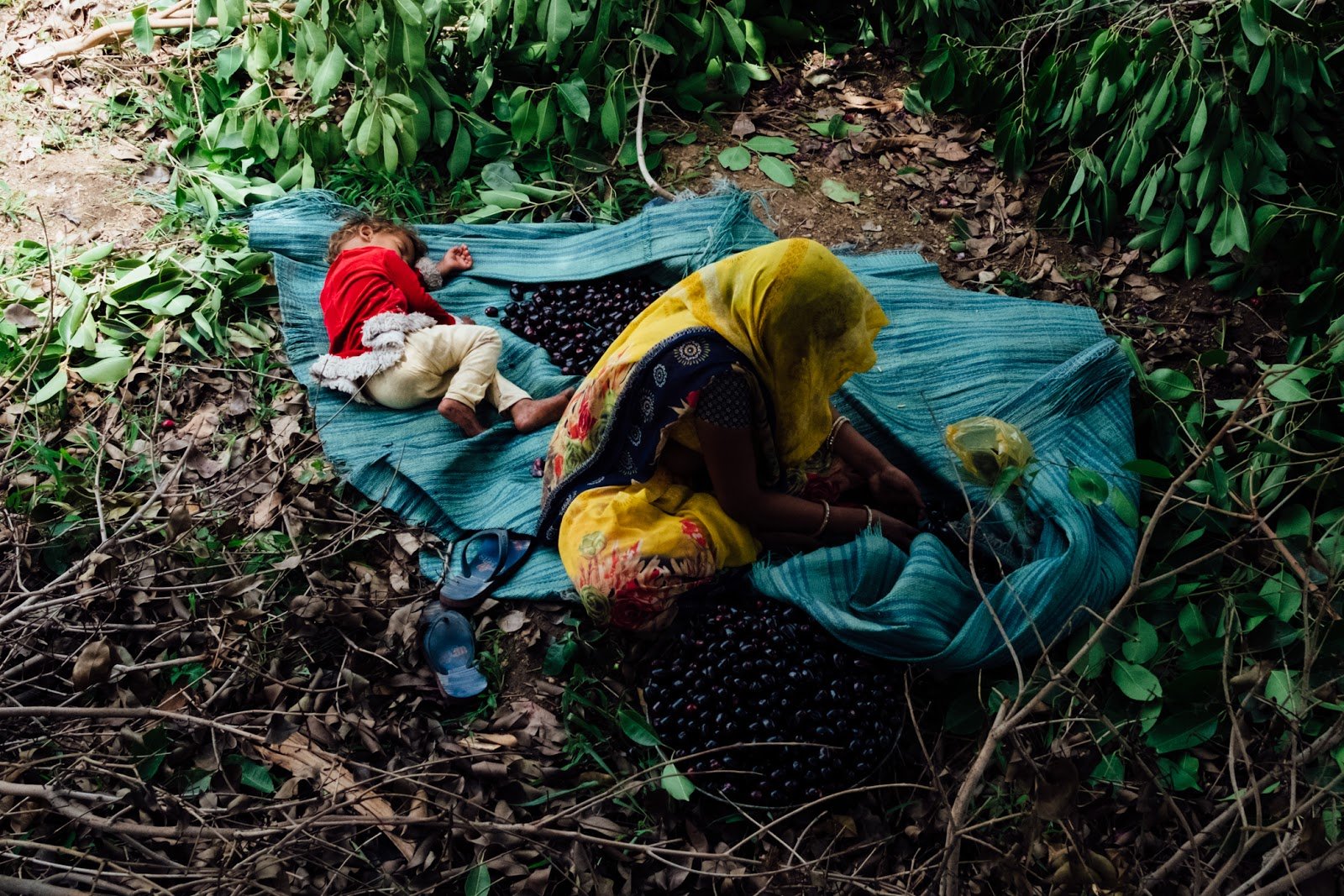
The 21-day nationwide lockdown was announced on March 24, 2020, in order to limit community transmission of the disease and to flatten India’s curve of coronavirus cases. In the wake of this hasty decision taken by the government, thousands of migrant workers were left stranded in the cities, as the state borders were sealed, public and private transportation banned and the roads were patrolled by the police. The Economic Times[1]reported that over 50,000 workers left on foot from Ahmedabad alone, to get to their homes in Rajasthan. As per the cases reported to Labour Line, a helpline run by Aajeevika Bureau, while many workers left for their homes on foot, many remained left behind in the cities, stuck in remote industrial areas of Ahmedabad, Mumbai, Jaisalmer, and were being forced to work by their employers[2].The mass exodus of migrants from India’s fast developing cities uncovered a serious crisis that has been lying at the heart of our economic growth. It showed the sedentary bias --- a concept in migration studies that hold that being sedentary is the norm while movement is a disruption ---in our policymaking which largely remains pro industry and overlooks the needs of the workers.However, lurking beneath images of walking migrants, were also the challenges of migrant households back in the rural hinterlands. Very less is known about how these migrant households sustained themselves during the lockdown, once the workers were back in their villages. What transpired once the men returned – within the households and in their communities? The present paper attempts to find answers to these questions in addition to what this movement of migrants means for their village-dwelling families.
As the lockdown persisted, the increased house work for women was accompanied by their increased anxiety around managing the house.
This included drawing a loan, arranging for food, water and fodder for the cattle and most importantly, caring for the family members. The nature of these tasks remained highly domestic and were seen as women’s responsibilities, increasing their unpaid work burdens within the household. The present paper is based on the evidence collected from the remote villages of southern Rajasthan and uses gender analysis to understand the impact of the nationwide lockdown. In-depth interviews with 30 Adivasi women from migrant households of Udaipur district’s four blocks reveal that these households remained some of the smallest yet most vulnerable units during this treacherous time.
Seasonal Male Migration from southern Rajasthan --- Not a New Phenomenon
The movement of people across state borders in search of work has been a decade long phenomenon. This movement of internal migrants has seen a steep rise in the last three decades as captured in the 2011 Census. Eminent journalist P. Sainath highlights that the Census of 2011 noted for the first time after 1921, that ‘the number of people urban India added to its population was more than the number of people rural India added to its population[3]. In southern Rajasthan, this phenomenon is characterised by the movement of Adivasis in the region having low nutritional levels, health, and education towards the adjacent states of M.P and Gujarat, occupying the ‘lowest of the heap’[4]jobs in the labour markets. The historical depletion of natural resources in the region has decreased the dependence of these migrant communities on their traditional livelihoods[5], rendering them out of work and desperate. The industries use this desperation to employ them in exploitative work conditions only to maximise their own profits. Jain and Sharma[6]explores the exploitative work conditions of these workers in the cities, characterised by complete suspension of labour protection, vertical mobility, dignified living conditions and safety. Sharma et al’s analysis in 2014[7]found that the median monthly income of an unskilled Adivasi seasonal migrant worker from southern Rajasthan is Rs 5000. While the cost of living for a single male migrant worker in the city of Ahmedabad (a major destination for the migrant workers) was found to be around Rs 3500- Rs 3800 monthly.
This is exclusive of any kind of support provided by the employers towards workers’ food and lodging. It was further understood that in cases where the employers contributed towards their food and lodging, their wages did not even meet the minimum wage threshold[8]. A recent analysis by Aajeevika Bureau (2019-2020) shows that the wages remained stagnant and same, while inflation has grown so much in this five-year period from 2014 to 2019[9]. This is accompanied by delay in payments, and wage disputes which further hinder the monthly flow of wages in the economic basket of the migrant household. Additionally, they have severe implications on the consistency of remittances sent back to the families in the villages[10]. Thus, the sudden suspension of work in the month of March, brought a new array of problems for the migrant workers. They were already reeling from the impact of low wages, along with long standing delayed payments and work-related disputes. Therefore, many workers had no other option but to head back home in a state of complete helplessness.
The next section of the paper offers a close analysis of the working of a migrant household in southern Rajasthan. Evidence collected from the literature suggests that the migrant household has been dependent on the ‘care duties and social reproduction’ performed by women of these migrant households[11]. The concept of Social Reproduction is understood as the process of reproducing the labour power itself before that labour power is exchanged for value in the market. As Antonella Picchio explains inSocial Reproduction: The Political Economy of the Labour Market, “housework is the production of labour as a commodity, while waged work is the exchange of labour. To be exchanged, labour must be produced[12].”
Jain and Jayaram[13]further highlight the intensity of women’s responsibilities from migrant households and challenge the notion of ‘left behind women,’ a popular term to address women from areas having high incidence of male migration. Using field evidence, the current paper argues that the existing women’s duties of reproducing a migrant household was further intensified during the lockdown.
Role of social reproduction in sustaining a migrant household
In southern Rajasthan 80% of the interstate migrants are males who migrate towards Gujarat and Maharashtra, as their families (wives and children) remain in the village[14]. Ravi Srivastava[15]has highlighted such a trend in the national migration data as well, where 85% of the short distance seasonal migrants are male who move without their families.
Aajeevika Bureau’s estimate[16]around women’s contribution towards a household accounts to over Rs 50,000 monthly! This is the valuation of the free labour that women perform for their families. This amount can be seen as household savings as families would have to pay around Rs. 50,000 if they were to pay wages to someone to perform the services that the household’s women perform for free.
Before the lockdown was imposed and the male members were away in the cities, a typical day[17] of an Adivasi woman’s life from migrant communities of southern Rajasthan was characterised by a variety of tasks. The tool of time use employed through participatory workshops with over 400 Adivasi women suggests that their day starts early at dawn and is soon engulfed by daily tasks of looking after the cattle (cleaning and milking them), cleaning the house and cooking for all the family members. In addition, there’s going to NREGA work or local construction sites whenever work is available. There are serious overlaps between the paid and unpaid care work performed by women from these communities. As highlighted by participant observations at the construction and NREGA work sites, tribal women also engage in the collection of firewood during the lunch break at the latter. Similarly, care is provided to the young children who often accompany women to their work sites, as there is no one to take care of them at home. In a study conducted in 2016, Mohan and et al[18], found that women spent a median of three ours in managing farms and two hours on collecting firewood and grazing cattle. It is to be noted that 50 percent of those women were also engaged in local wage labour which takes around eight hours of their time. For that work- they are paid somewhere between Rs 100-Rs 200 a day, which is much lesser than the wage received by their male counterpart for the same job. The study found that another five hours of their time is spent in travelling outside to go to the market- to buy basic goods, ration, and fulfill other social and religious obligations. The rest of the evening is spent in cooking and cleaning for the family members.
This work done by women is crucial in processing the wages earned by the male migrant as well as to make up for the gaps in it. She makes up for the vagaries confronted by the male migrant in the city through her physical, mental and emotional labour.
It is through this lens of social reproduction that we are going to analyse tribal women’s experiences from migrant communities in southern Rajasthan during the lockdown. Thirty women between 25years and 45 years were interviewed at length in April and May (the third month of lockdown in Rajasthan) on their experiences of going through the difficult phase. Two group discussions were also conducted, one with women between the age group of 40years and 60 years, and the other one with women who survived domestic violence at home. The next section looks at these diverse experiences of women from these communities and places them in the larger framework of social reproduction.
Findings: Gendered Implications of the Lockdown
Increased Amounts of Unpaid Work
Conversations with women from migrant households during the lockdown suggests that their unpaid responsibilities had doubled during the lockdown as the male migrants had returned home. The nature of their unpaid work has also undergone a major transformation. Tasks that were traditionally not considered women’s responsibility --- drawing a loan, arranging food on credit, managing their credit worthiness, or harnessing meagre ways of earning money --- became essential towards sustaining the household.
Ramli bai* from Sabla shared: “My husband is back home now. He orders me directly from his bed if he needs anything, or just claps while lying on the bed. He never takes anything on his own.” The increased work load has been accompanied by extreme amounts of stress for women as the entire responsibility of managing the house fell on their shoulders.
The feeling resonated with every woman interviewed. As Gomli Bai from Bhabhrana’s Amalva panchayat explains: “The task of fetching water cannot be done by the husband. If he will bring water, people will think I am not a good wife…sitting in the house, while the husband goes out to get water. Izzat (respect) is more important.”
Household tasks have always been associated with the idea of a good woman and bad woman. Even in a crisis situation, there has not been any discount on these tasks, however, women’s other responsibilities have increased manifold.
Earlier, male migrants would return to their villages during monsoons, mainly to work on their farms[19].Women reported that men only work in the fields ---building boundary, watering the fields, sowing and ploughing. Devlibai says: “When he comes back, he works in the field, however it was not the farming season this time. He helps there but when he is home, he doesn’t do any work.” The farm work has a productive value assigned to it because of the monetary value it fetches for the family. However, similar contribution by male members is not made in the unpaid household tasks. German sociologist Maria Mies[20]argues that the process of housewifisation of women’s labour blurs the sources of value. It hides the productive contribution of women to the market and devalues their contribution by terming them as non-value producing.
Almost every household reported facing serious resource and money crunch during the lockdown period as there was no work at all. With the 10 kg wheat of the Public Distribution System, basic food requirement was taken care of for those who were covered by the Food Security Act. However, those falling outside its ambit (due to problems at the operational end), faced serious difficulties. A garasiya (a tribe residing in Rajasthan and Gujarat) woman from Gogunda’s Shivadiya shared that they have a family of 10 and only eight members have been enlisted in the food security list. She says: “Only I know how I am managing the house. There is no food at all. We go to people’s houses to ask for dry chilli or buy it from a shop. We then eat it with chapatis.”
The scarcity of resources, dysfunctional implementation of social security and meagre savings also increased women’s responsibility for arranging things on credit. Manka Bai from Gogunda’s Palasma panchayat shares that her husband does not share her worries of managing the house. Even during the lockdown when all kinds of construction and allied activities were suspended, women took on the task of earning money through available resources. For Kerpura’s Hansa, stitching and selling clothes remained the only option while for Palasma’s Mirkibai, selling vegetables that she procured from her parents’ village became the only source of income.
The intimate nature of these diverse tasks, as argued by Jain and Jayaram, forms the basis of women’s relationship with the household, as a wife, mother, daughter or sister in law and interlaces their tasks with the duties of love, care and sex. It was this expectation of love and care that increased the work burdens of women during the time of a crisis like the present one. In cases where this expectation was not fulfilled, women were met with violence from their husbands and in laws. In fact, the very same intimate quality of these responsibilities further justifies this kind of domestic violence. Sarita, a Rajput woman from Barwada’s Boramcha panchayat, wishes for the lockdown to last for another six years. She managed to come to her mother’s house in Boramcha after a month of the nationwide lockdown to escape her husband and his family. She decided to leave when the fights, verbal abuse and attacks on her character started becoming unbearable --- all stemming from the in-laws’ dissatisfaction regarding her household work responsibilities. “Earlier they had issues with whatever we (she and her sister in law) cooked. But now that we both have left the house, they are making and eating Khichdi every day,” says Sarita. In a different context, Yeoh et al[21], while studying transnational wives in Singapore, argues that the social contract of marriage, renders all forms of work as intimate to a greater or lesser degree and the quality of work is often demanded and seen as a measure of love within a marriage. Thus, when that quality of work is not met, violent retaliation towards hurting women’s dignity and their bodies is often justified.
Kokila[22] from Udaipur’s Kherwada block shares that her husband’s long-standing affair started becoming a reason for their increased quarrel till the day her husband beat her up and threw her out of the house at midnight.
Women’s testimonies prove that the domestic quarrels have not only increased during the last three months but have also turned more violent. With limited resources and increased stress levels, women are at the receiving end and are accepting physical blows on their bodies.
These responses also determine the impact of migration on women’s lives. Even though many acknowledged that they would have been worried about the husband if he had not managed to come back, around 50 percent also confessed that they would have preferred it otherwise. “It is better when he is away in the city working. I feel freer and he also sends money back home,” said Gopi Bai.
Single Women Households
Single women had no one to share their work and worries with. Households headed by this category of women reported not receiving goods on credit during the lockdown as their credit worthiness is low. Many single women from Salumbar’s Banoda panchayat have even described coronavirus as a ‘hunger crisis’[23].
In addition to this, panchayat officials pose a set of challenges for these households, making it impossible for them to access government schemes. “When I went to the panchayat to demand work under MGNREGA, the watchman outside the office started asking me all kinds of questions,” says Gamani Bai. Challenging Adivasi women’s knowledge and reprimanding them for coming to the panchayat office have long been practised in these remote areas[24]. For single women, this unfair experience becomes even more frequent and is further worsened by unrealistic demands by panchayat officials.
This highly stigmatised group of single women live in acute social isolation and discrimination, with serious implications on their mobility and ability to earn. While the occurrence of child labour is not limited to such families and is a broader phenomenon, Aajeevika Bureau’s 2017 analysis found that it was more common in women-headed households. Not only were more children seeming to drop out of school to work, they also seem to start younger and work more regularly than other children. Such pressures continued during the lockdown, with many young children from single women headed families, bearing the cost of their families alone. In Salumbar’s Baroliya, 14-year-old Mukesh had to return to his village during the lockdown. He was working in an eatery in Ahmedabad earning Rs 8000 but he is back now in the village and is working on other people’s farms as every other work has been shut. Mukesh is the primary earning member in his family of six. His widowed mother suffered from tuberculosis and was not able to toil for long stretches[25]. Mukesh lost his mother to the treacherous disease in June.
The industry, using migrant labour as well as the labour of these women, to reproduce these households and for their own capitalist accumulation, rendered them completely helpless during the lockdown. Left with no income or savings, these migrant households simply relied on their womenfolk and their meagre resources in the villages to sustain themselves. The public health emergency presented through the pandemic, has been borne with the cost of the lives of the most vulnerable, who walked thousands of miles to get back home. And most importantly, the wives of these migrant workers who stayed back in the villages bore this cost of the sudden and unplanned lockdown through their labour, mental and physical exhaustion and by bearing the blows on their bodies. The labour of these women ensured that the male workforce remains available for the industries when work resumes in the cities. Even though the often-referred ‘left behind women’ did not walk thousands of miles to get home, their struggles in sustaining those houses have not been any less. The cost of the continuous social reproduction performed by these women, has remained hidden and unvalued.
Note: * Names of interviewees have been changed to protect their identity.
[1]*Drishti Agarwal works with Aajeevika Bureau's Family Empowerment Initiative and takes a lead in systematising knowledge around issues related to the functioning of social security schemes, violence against women and adolescent girls' labour. Manju Rajput leads the organisation's Family Empowerment Initiative. She is trained in advocating for the issues of women's rights, equality, and people's access to MGNREGA and food security.
References:
Press Trust of India. Rajasthan Migrant Workers in Gujarat leave for home on foot after lockdown. March 25, 2020. https://bit.ly/30UbP08
[2]Urvashi, Rawal D. (2020, July 10). Four-fold rise in calls related to wage disputes during lockdown. Hindustan Times. Retrieved on 10 July from https://bit.ly/3hMKioo
[3] Sainath, P. (2020, May 13). Urban India didn’t care about migrant workers till 26 March, only cares now because it’s lost their services: P. Sainath. First Post. Retrieved on 10 July 2020 from https://bit.ly/3jOPwl3
[4]Breman, J. (2013). At Work in the Informal Economy of India. Oxford University Press.
(1996) Footloose Labour: Working in India’s Informal Economy. Cambridge University Press.
[5]Mosse, David, “Power and the durability of poverty: A critical exploration of the links between culture, marginality and chronic poverty,” SSRN Electronic Journal. DOI:10.2139/ssrn.1615629.
[6]Jain, Priyanka, & Amrita Sharma,“ Super-exploitation of Adivasi Migrant Workers: The Political Economy of Migration from Southern Rajasthan to Gujarat,” Journal of Interdisciplinary Economics Vol.31, No.1: 63-99. DOI:10.1177/0260107918776569
[7]Sharma A, Poonia S, Ali Z and Khandelwal R. Their Own Country: A Profile of Labour Migration from Rajasthan. Aajeevika Bureau. 2014 (cited 2020 May 18). Available from https://bit.ly/2ErDCgR
[8]Sharma A, Poonia S, Ali Z and Khandelwal R. Their Own Country: A Profile of Labour Migration from Rajasthan. Aajeevika Bureau. 2014 (cited 2020 May 18). Available from https://bit.ly/3hJGELR
[9]Aajeevika Bureau. Unlocking the Urban: Reimagining Migrant Lives in Cities post COVID-19. (2020). (Available from: https://bit.ly/3hJHR5R)
[10]Sharma, Rajendra. 2008. Kaun Sunega, Kisko Sunaye: A Study on Labour Disputes. Udaipur: Aajeevika Bureau.
[11]Jain and Jayaram. Intimate’s Subsidy to Capital: Gender Analyses of Male Migration from Western India and Commodification of ‘Left-Behind’ Women’s Labour’, Gender, Place and Culture (forthcoming)
[12]Picchio Antonella, Social Reproduction: the Political Economy of the Labour Market. (1991). Cambridge University Press.
[13] Supra at 9
[14] Id.
[15]Srivastava, R. (2011). Internal Migration In India: An Overview Of Its Features, Trends And Policy Challenges. New Delhi.
[16]Adivasi women have been mobilized under village level solidarity groups called Ujala Samoohs. The participatory workshops discussed the time use of women from migrant households to understand their work patterns (including both paid and unpaid work). As these workshops are also aimed at conscientization, the facilitator discusses with the participants and assigns a monetary value to the various tasks performed by women. Through this methodology, the average value of women’s work in a month, that emerged from these workshops is over 50,000 rupees monthly!
[17] Supra at 9
[18]Mohan P, Agarwal K, Jain P, “Child Malnutrition in Rajasthan: Study of Tribal Migrant Communities,” Economic & Political Weekly, Vol. LI No 33. pp- 74-75.
[19]Sharma A, Poonia S, Ali Z and Khandelwal R. Their Own Country: A Profile of Labour Migration from Rajasthan. Aajeevika Bureau. 2014 (cited 2020 May 18). Available from https://bit.ly/2BIDZCS
[20]Mezzandri A., “On the value of social reproduction Informal labour, the majority world and the need for inclusive theories and politics,” Radical Philosophy, Issue 2.04 , Series 2, Spring 2019
[21]Yeoh, Brenda S.A., Heng Leng Chee, and Thi Kieu Dung Vu, “Global householding and the negotiation of intimate labour in commercially-matched international marriages between Vietnamese women and Singaporean men,” Geoforum 51: 284-293. doi: https://doi.org/10.1016/j.geoforum.2013.09.012
[22]Devi, Kokila (2020, July 13) A day in the life of: An Adivasi leader. IDR. Retrieved on July 25, 2020 from /https://bit.ly/3hEcNV8
[23]Dhurve, Preema, Rajput M. Adivasi mahilayonkaJhalka Dard, kaha Corona Bhook se marnekibimari. May 20, 2020. (Cited on 10 July 2020). Available from: https://bit.ly/2X3e6Vx
[24]Agarwal Drishti (2018, November 5) The Unending War towards Asserting Citizenship Rights. Adivasi women in Southern Rajasthan stand up against their oppressors. Migrantscape. Retrieved on July 17, 2020 from https://bit.ly/2Eom3hG
[25]Agarwal, Drishti & Dhurve, P. (2020, April 30). Dola Ram’s long and locked down road home. People’s Archive of Rural India. Retrieved on 15 July 2020 from: https://bit.ly/3gcap7D